Mia is part of the ambitious White Cape complex, where each restaurant is conceived as a spatial tribute to one of Russia’s wineries.
Информация
Заказчик
Hurma Group
Старт проекта
13.06.2026
Срок выполнения
2 years and 5 months
Город
Gelendzhik
Категория
resto
MIA
Mia is part of the ambitious White Cape complex, where each restaurant is conceived as a spatial tribute to one of Russia’s wineries.
The concept for Mia, inspired by the Usadba Divnomorskoe and Krinitsa wineries, is rooted in eclecticism: a world where advanced technology exists alongside a deep respect for the history of the place, its landscape, and the traditions of winemaking.
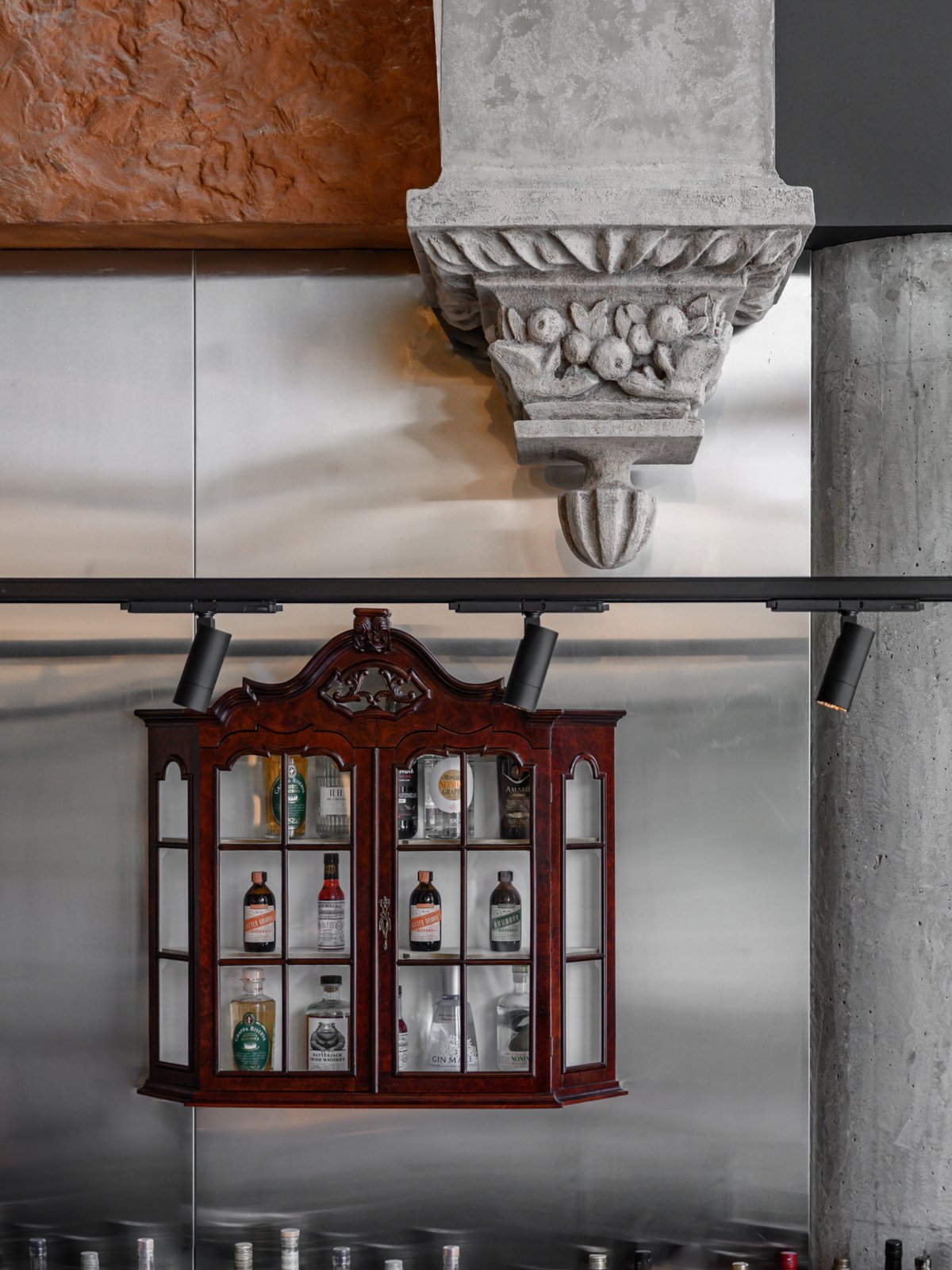
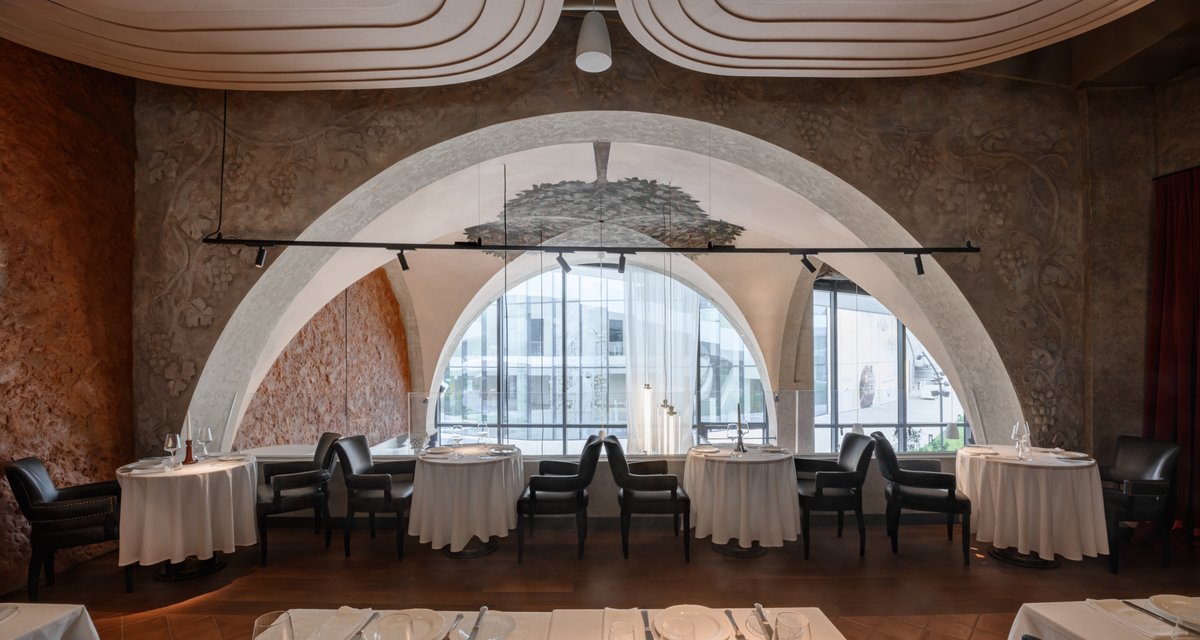
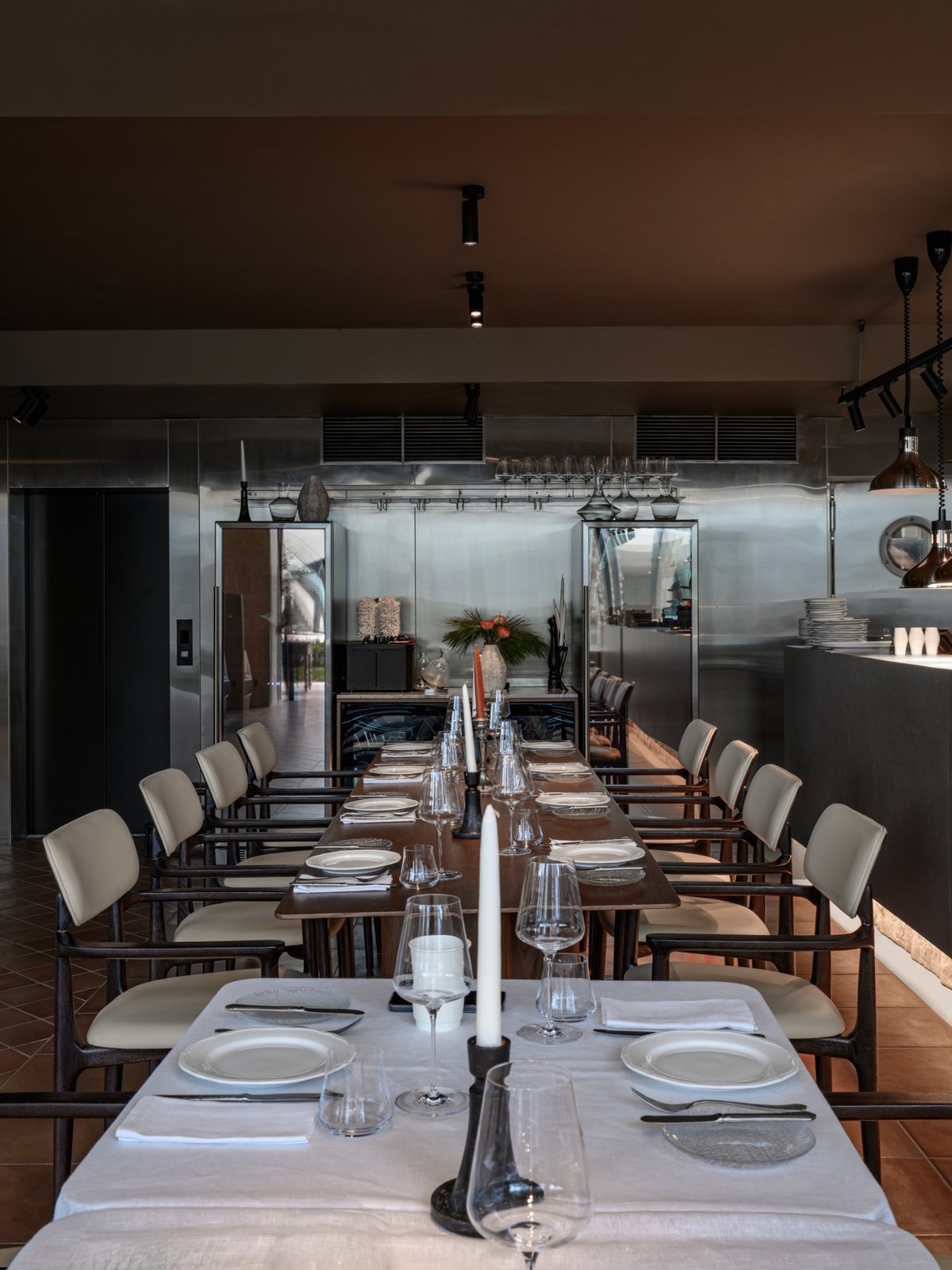
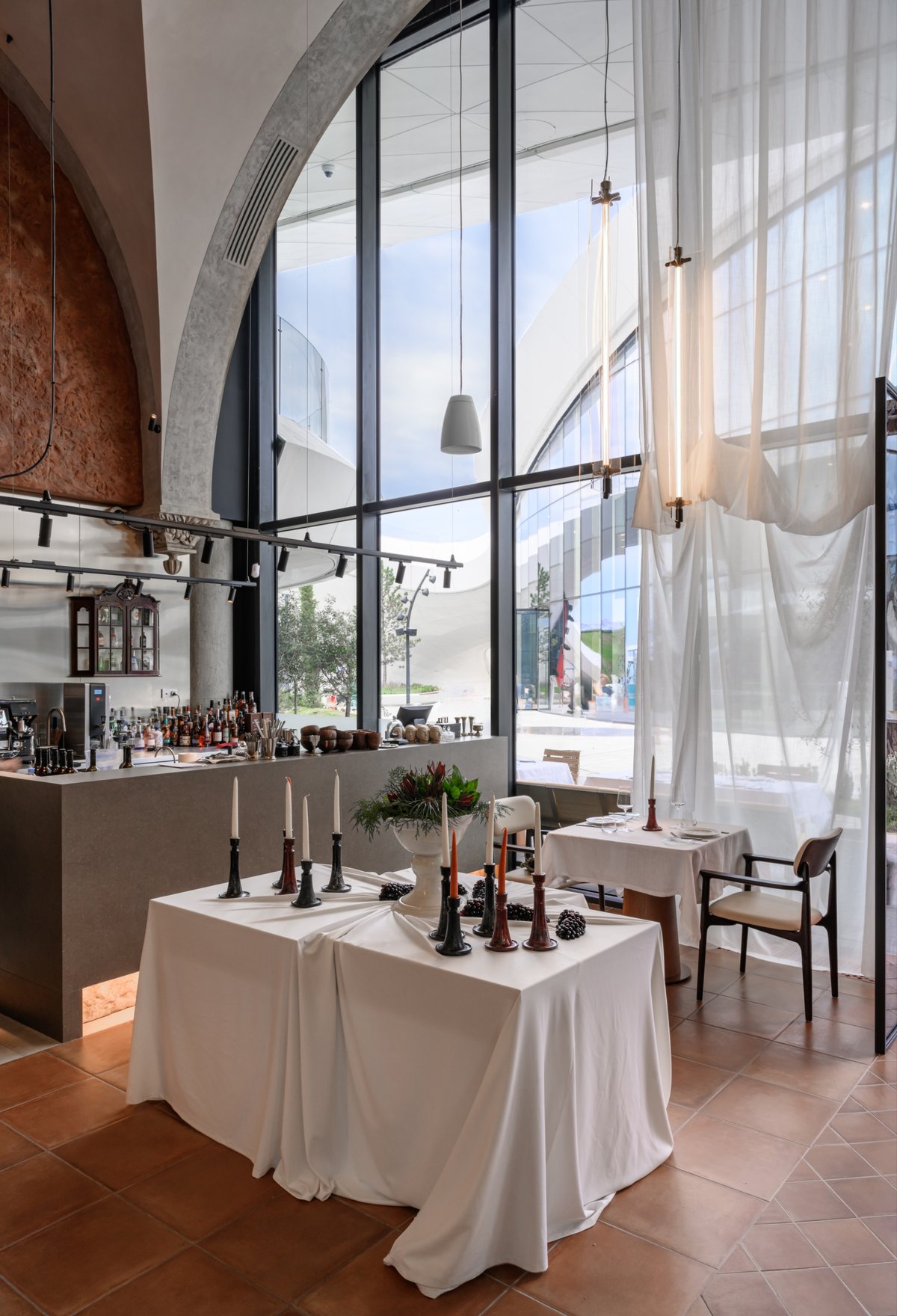
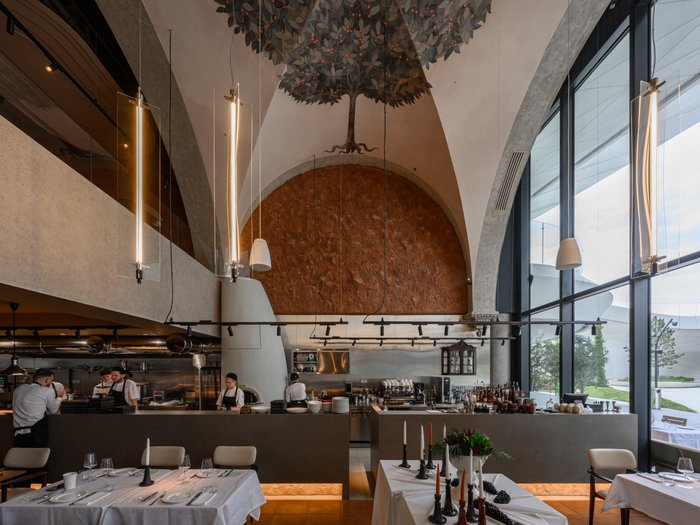
The interior is built around a dialogue between old and new. Its starting point is the image of a carefully restored castle – not as a literal historical reconstruction, but as a reflection on how contemporary design can inhabit cultural heritage. Much like the architecture of modern wineries, where the nobility of tradition meets the restraint of concrete and stainless steel, Mia brings archetypal forms of the past into conversation with contemporary artistic gestures.
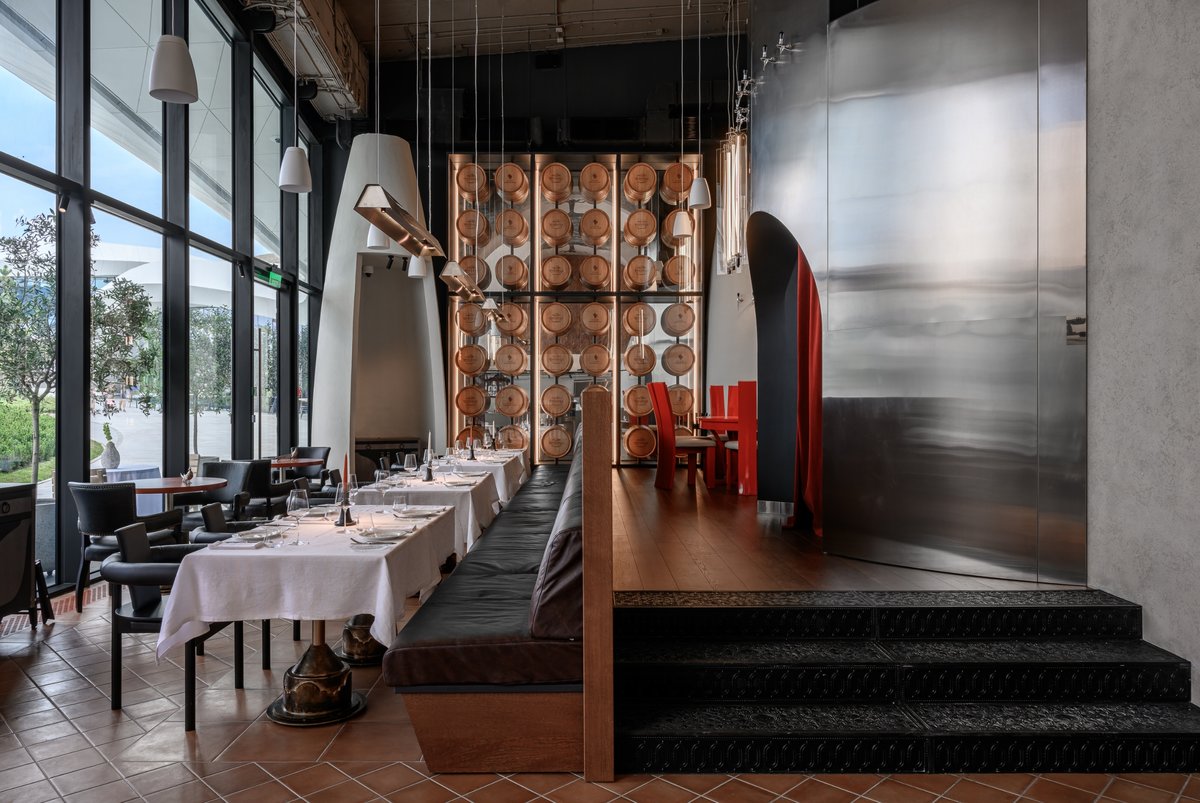
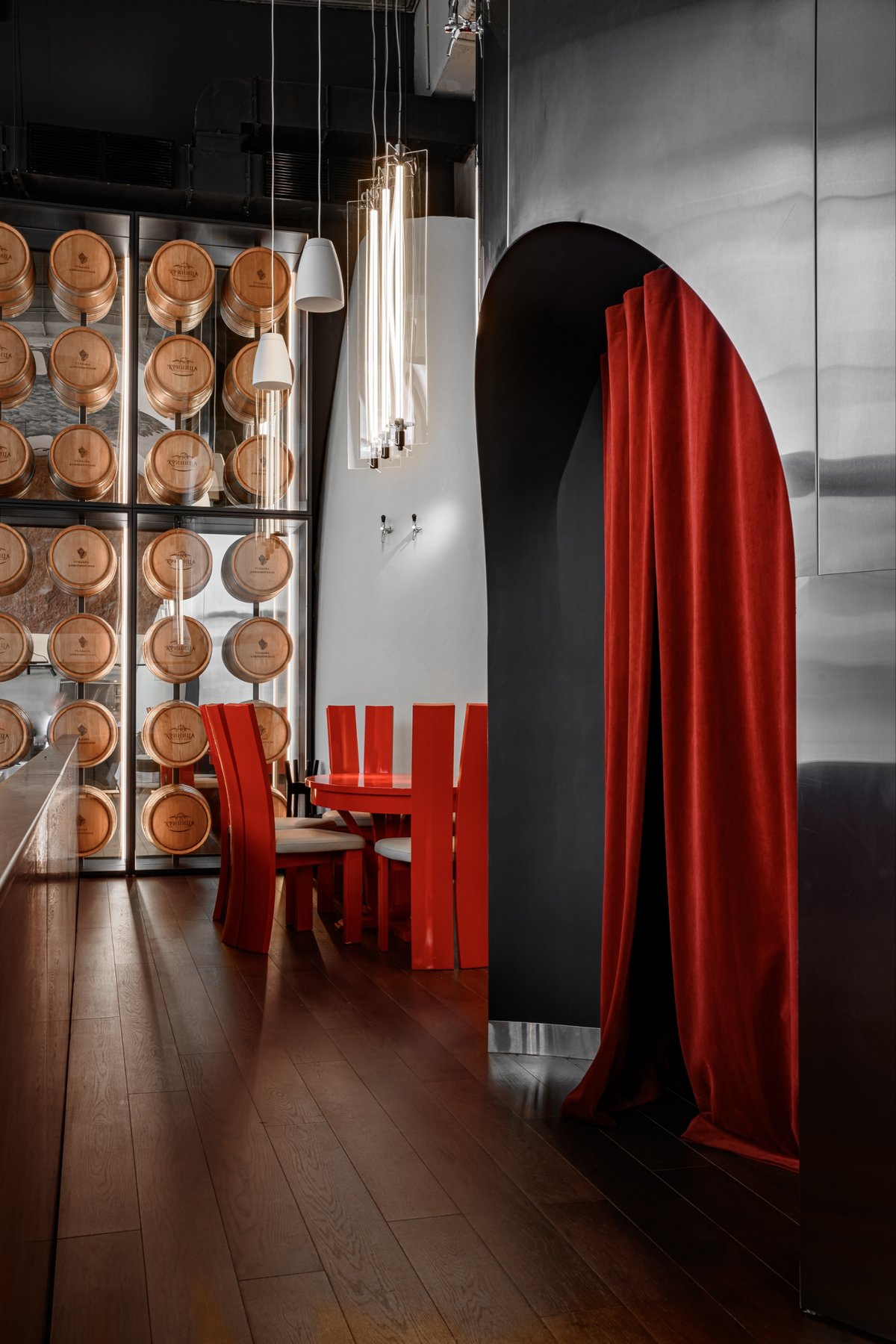
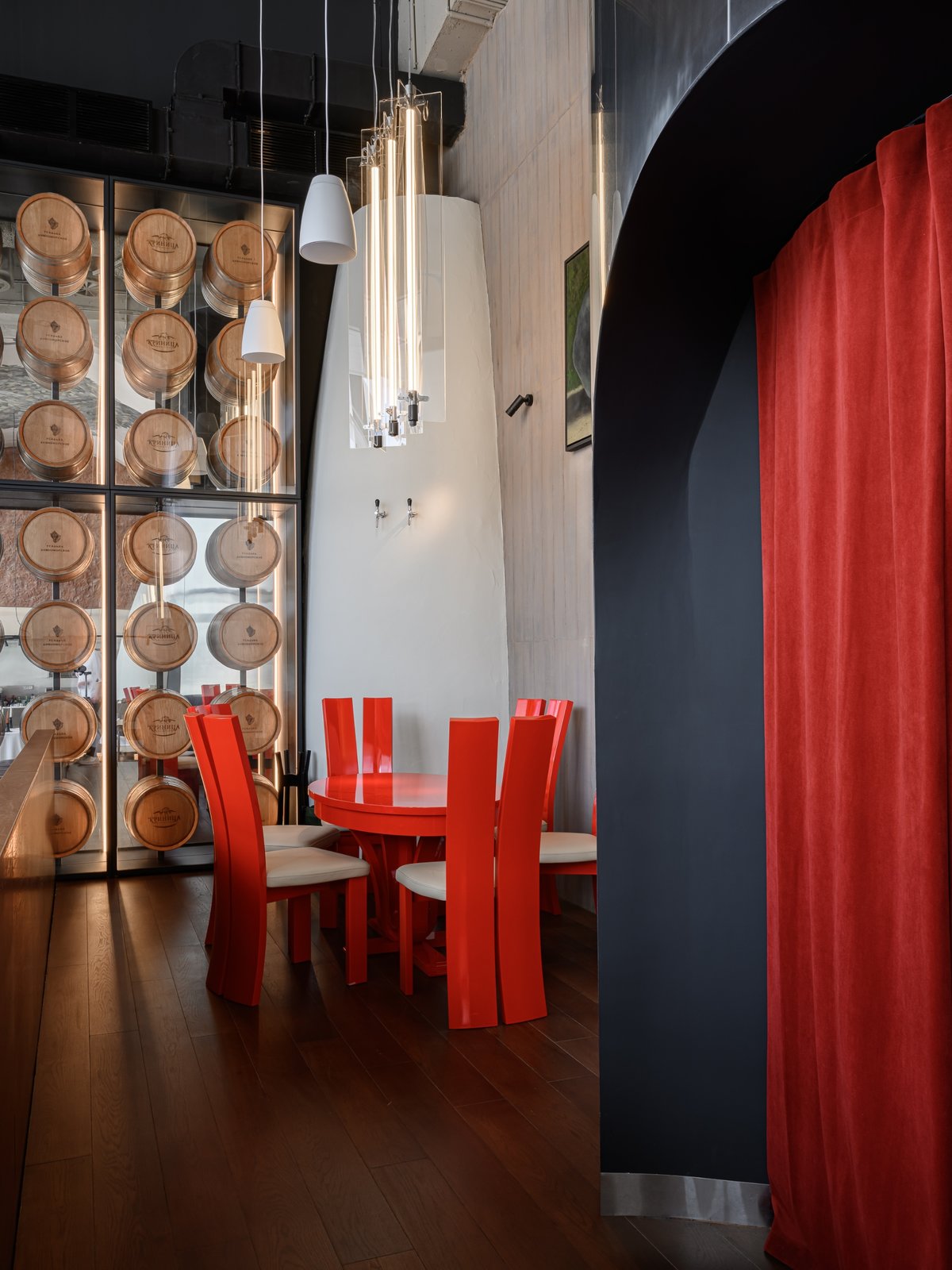
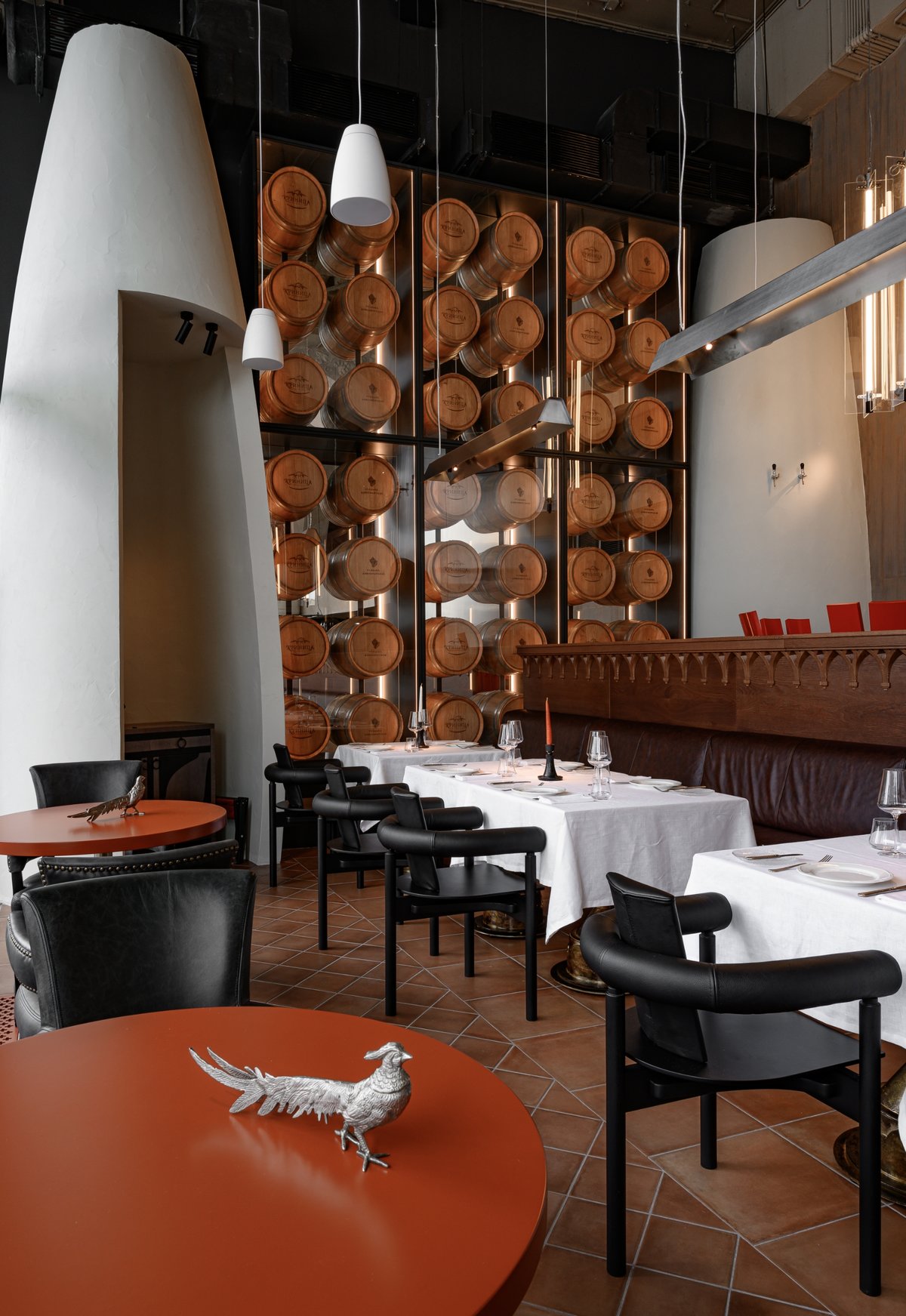
Oversized volumes appear throughout the interior, their forms inspired by classic wine tanks. Familiar elements of winery infrastructure are transformed into architectural objects and become part of the restaurant’s visual language. Monumental in scale, they emphasize its connection to the culture of wine production, revealing technology itself as an object of aesthetic fascination.
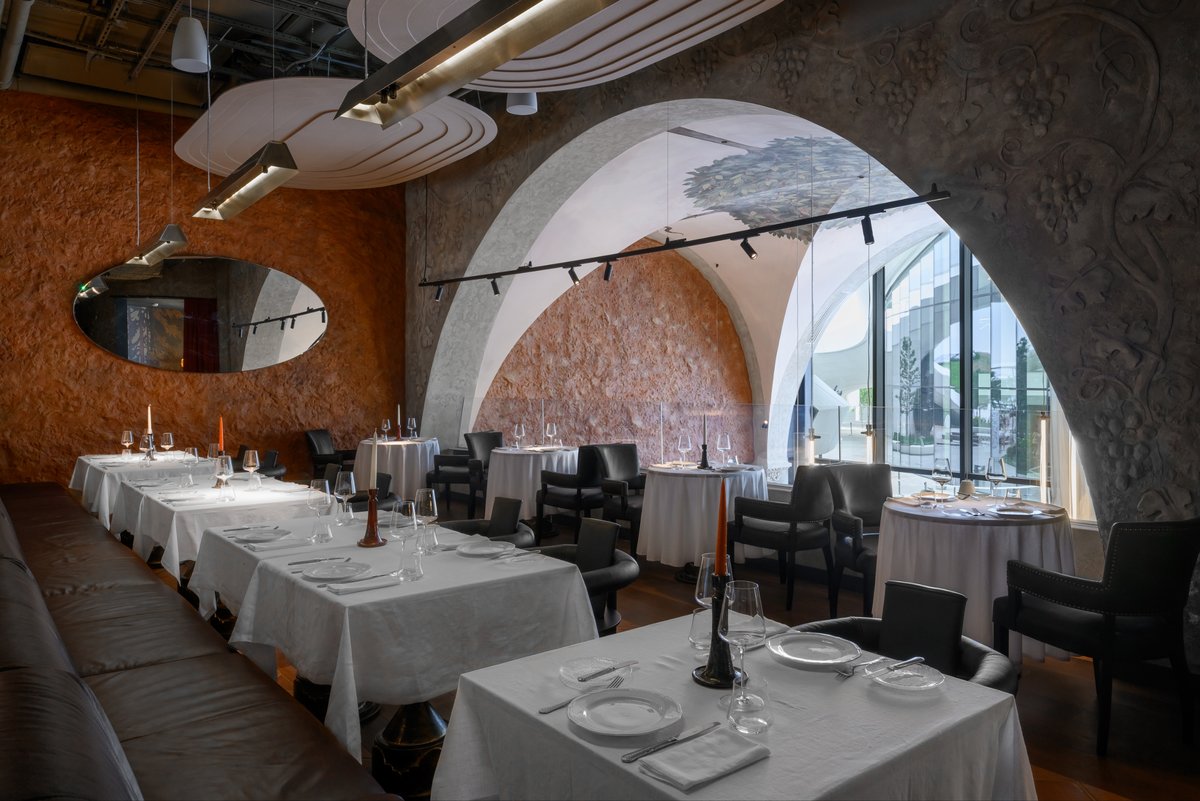
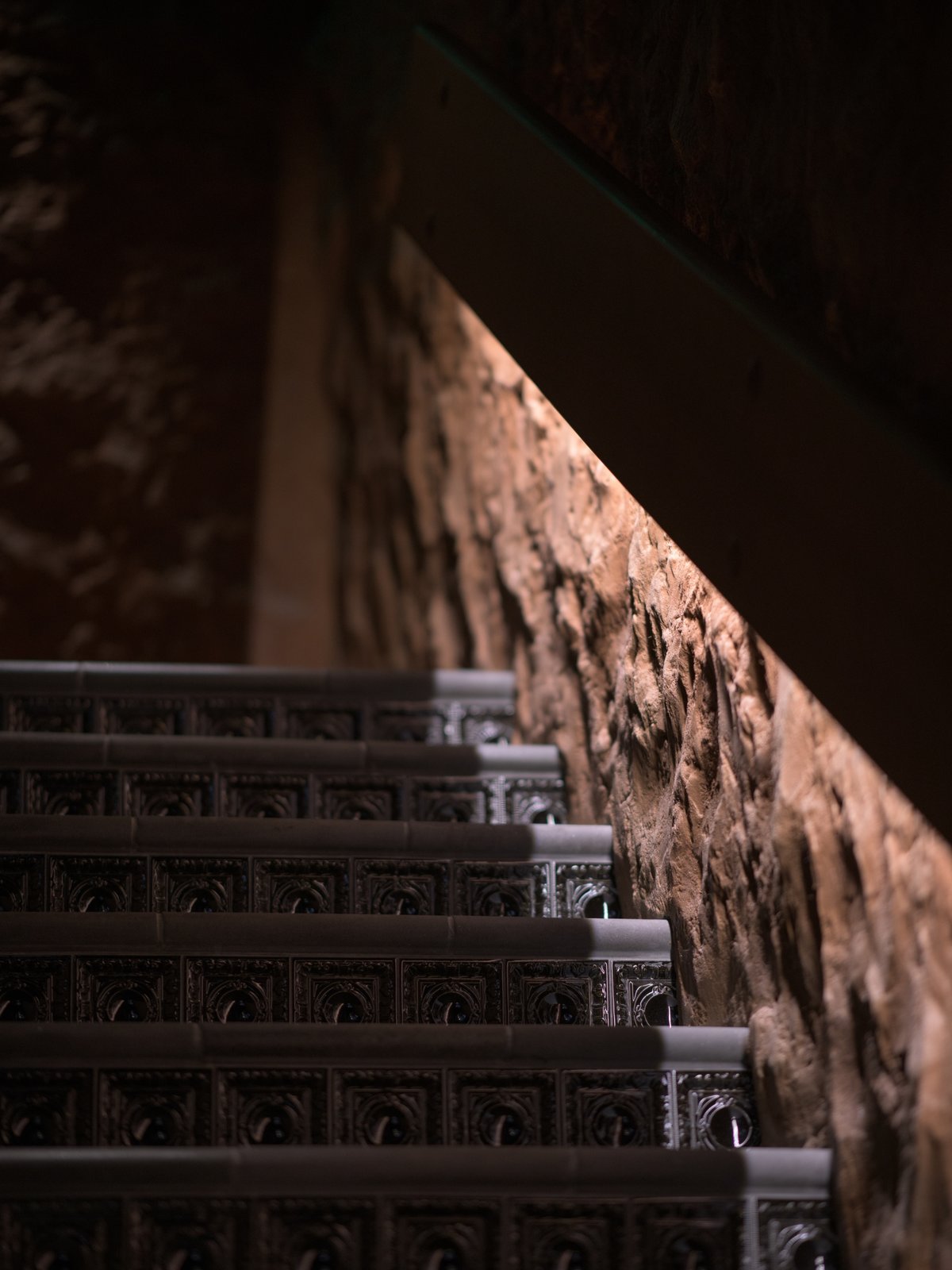
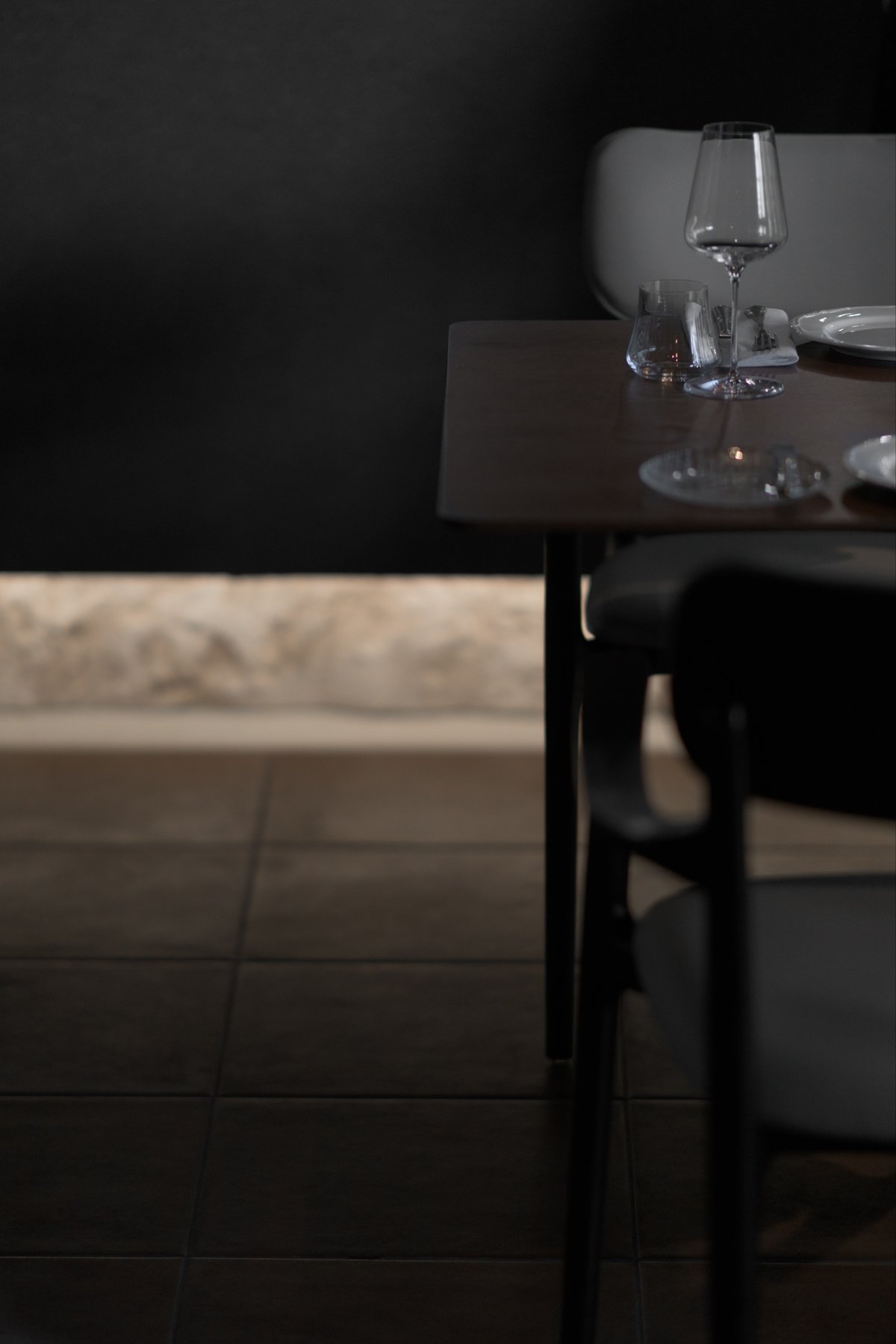
One of the defining images is the rock. The restaurant feels less constructed than carved from a solid mass of stone. The gesture evokes both the coastal cliffs of Divnomorskoe and historic wine cellars, where wine has been aged for centuries in coolness and shadow. The space takes on an almost cave-like quality-sheltered, mysterious, and imbued with a sense of time.
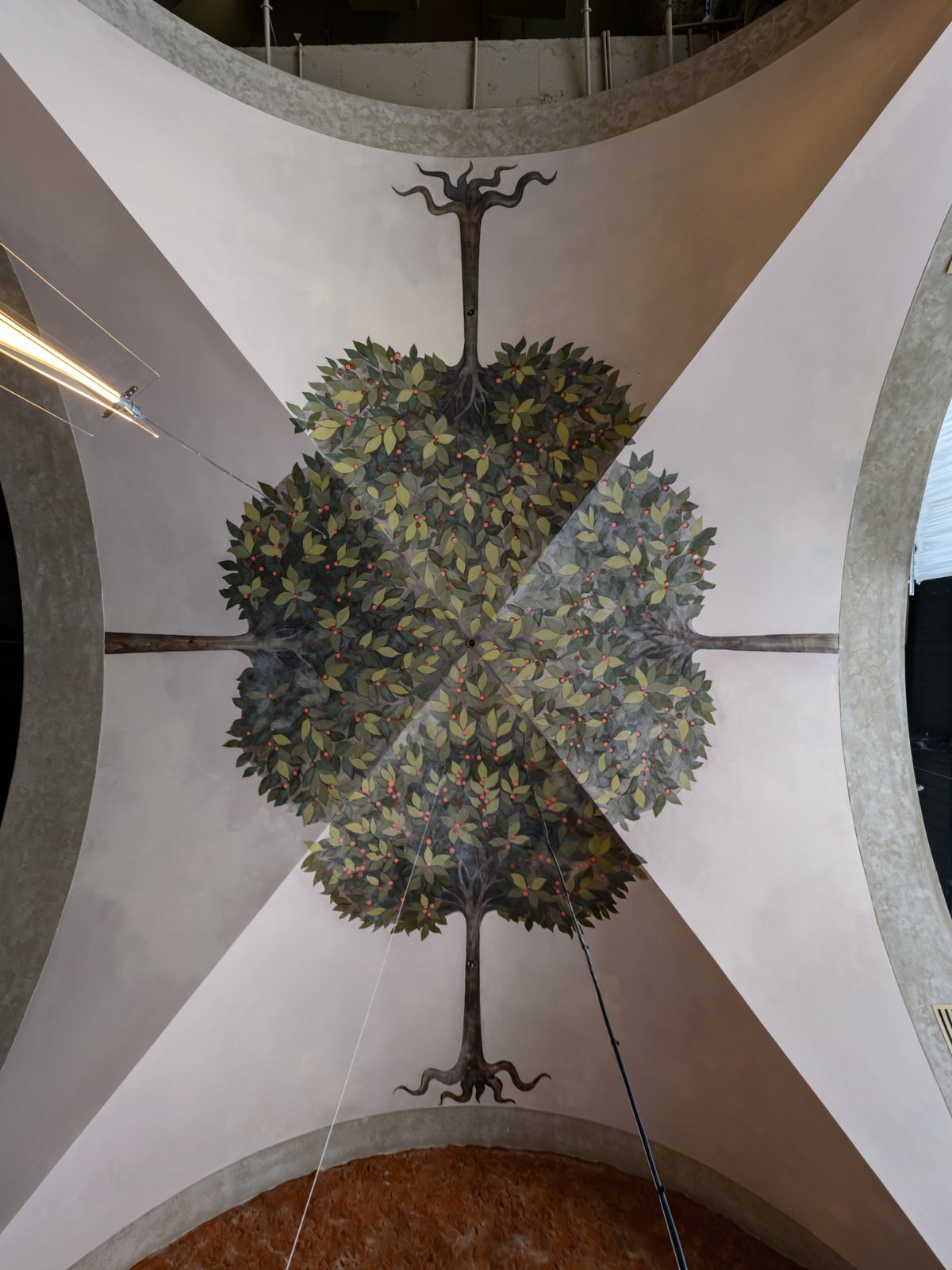
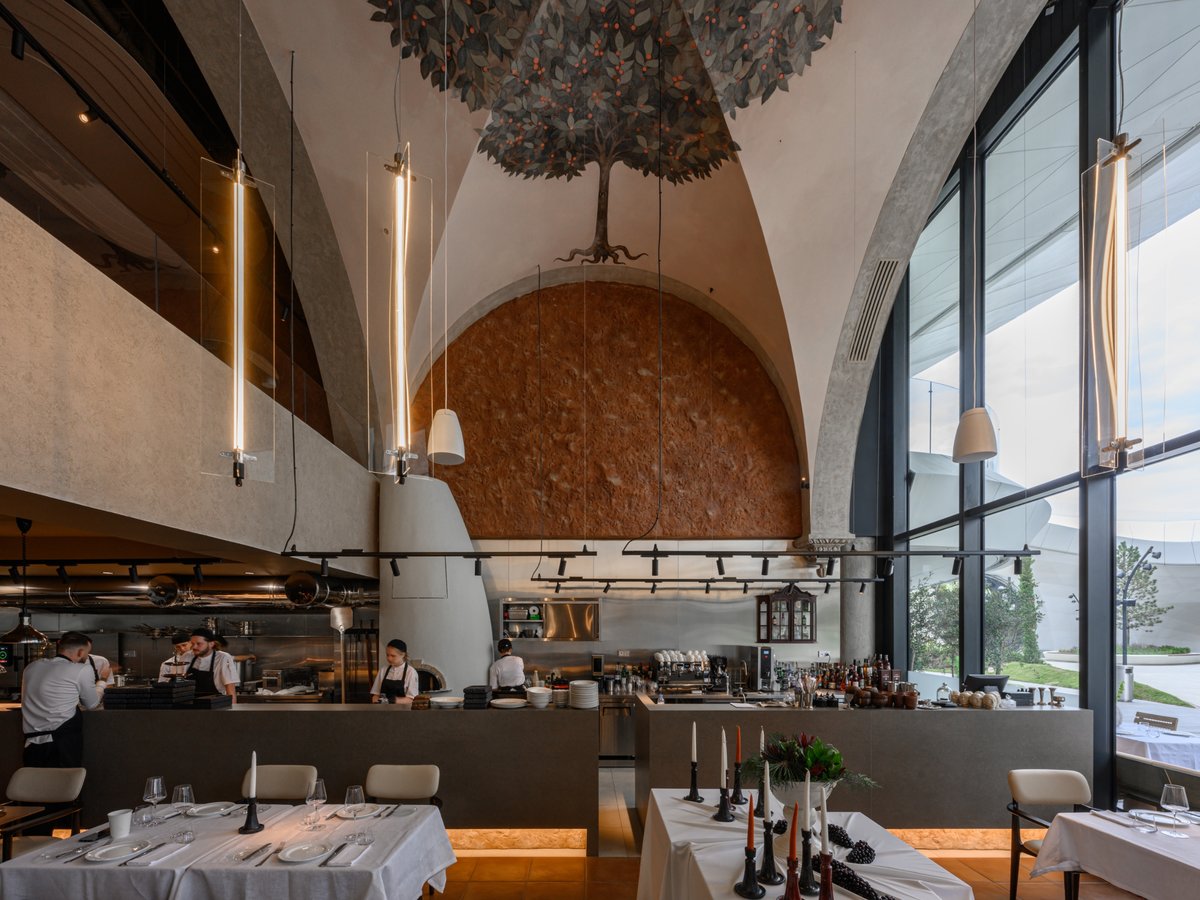
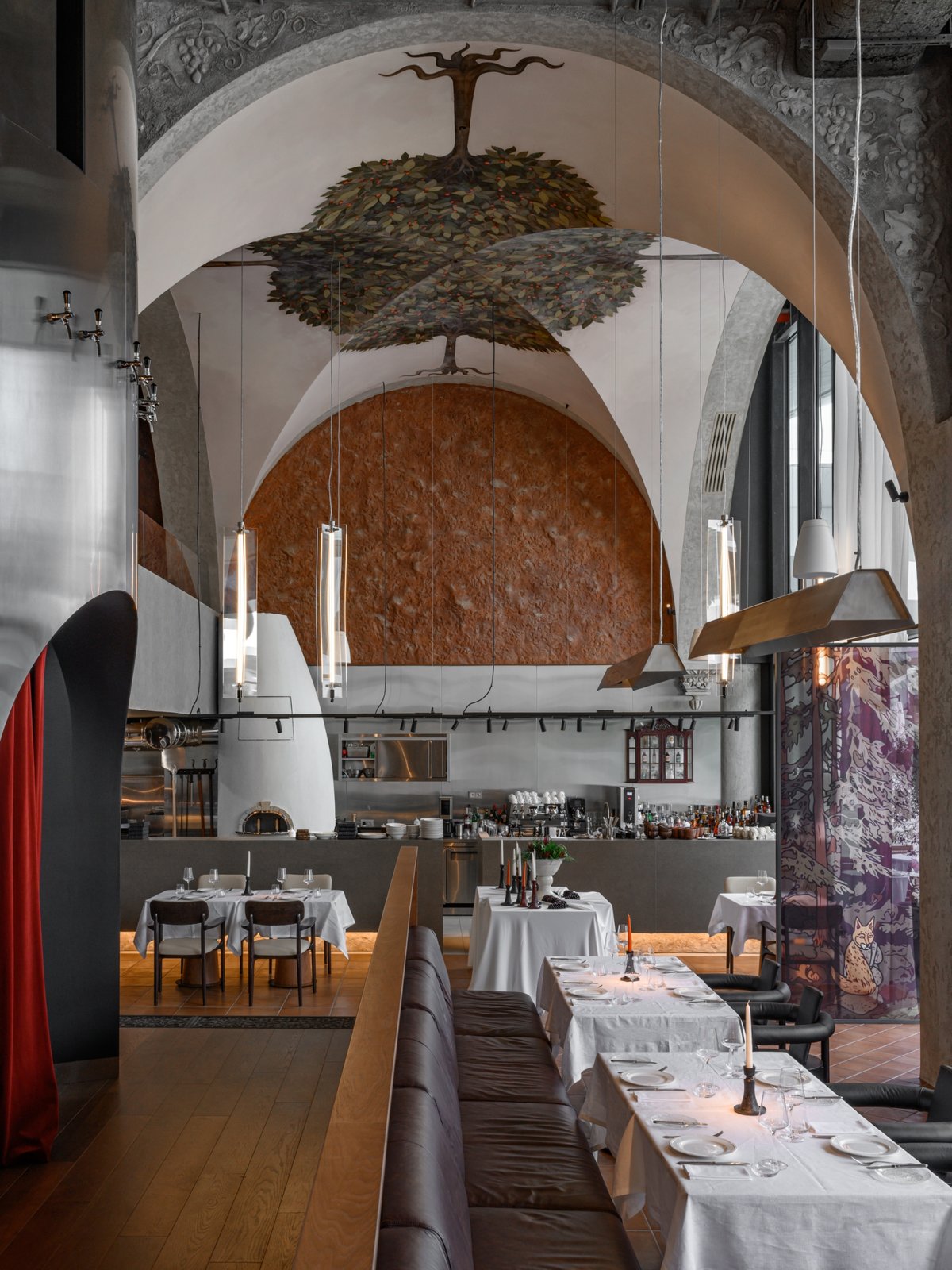
Vaulted ceilings reinforce this atmosphere. Their geometry recalls both classical sacred architecture and ancient wine cellars, where similar structures once provided ideal conditions for aging wine. The result is a space that feels at once monumental and intimate.
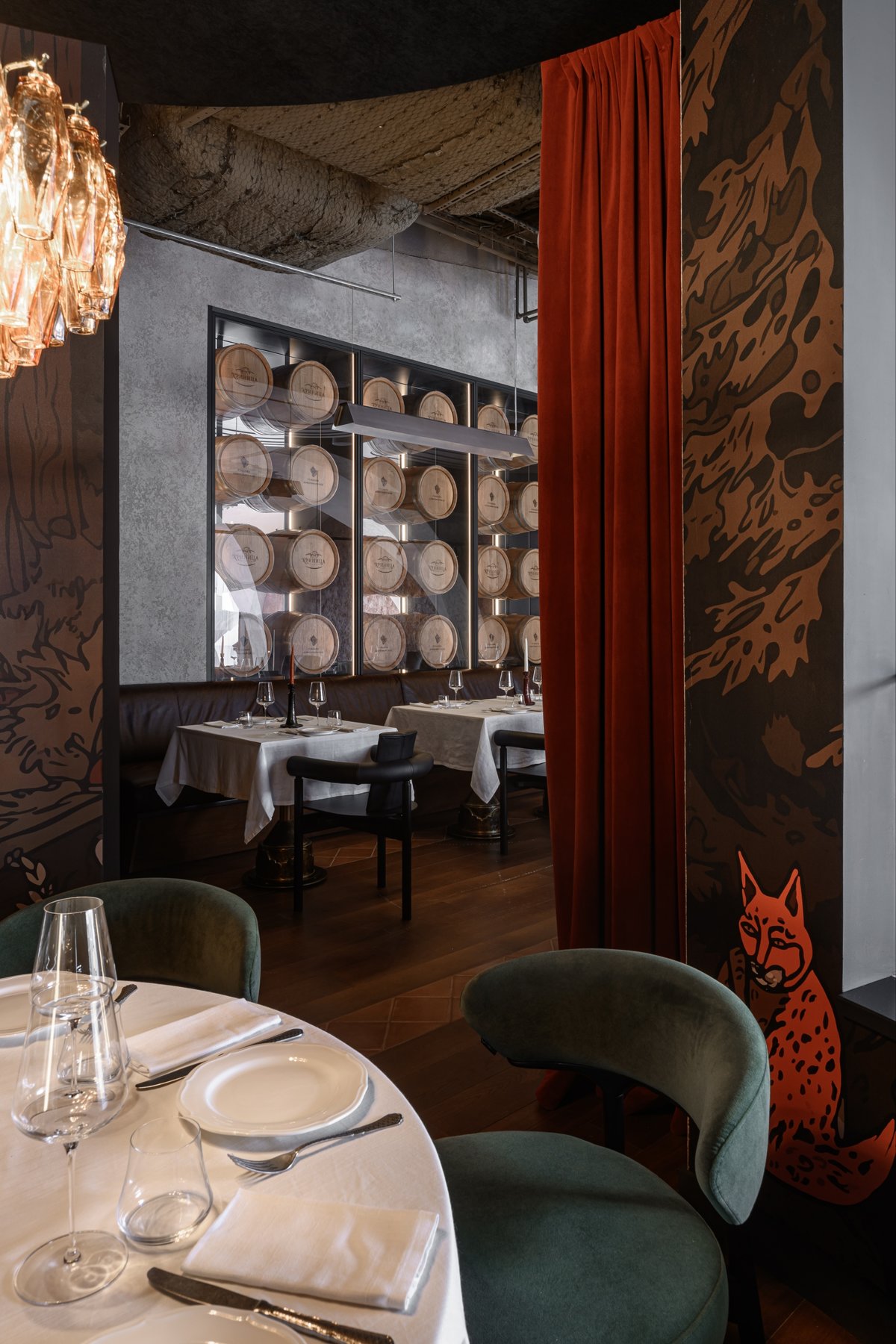
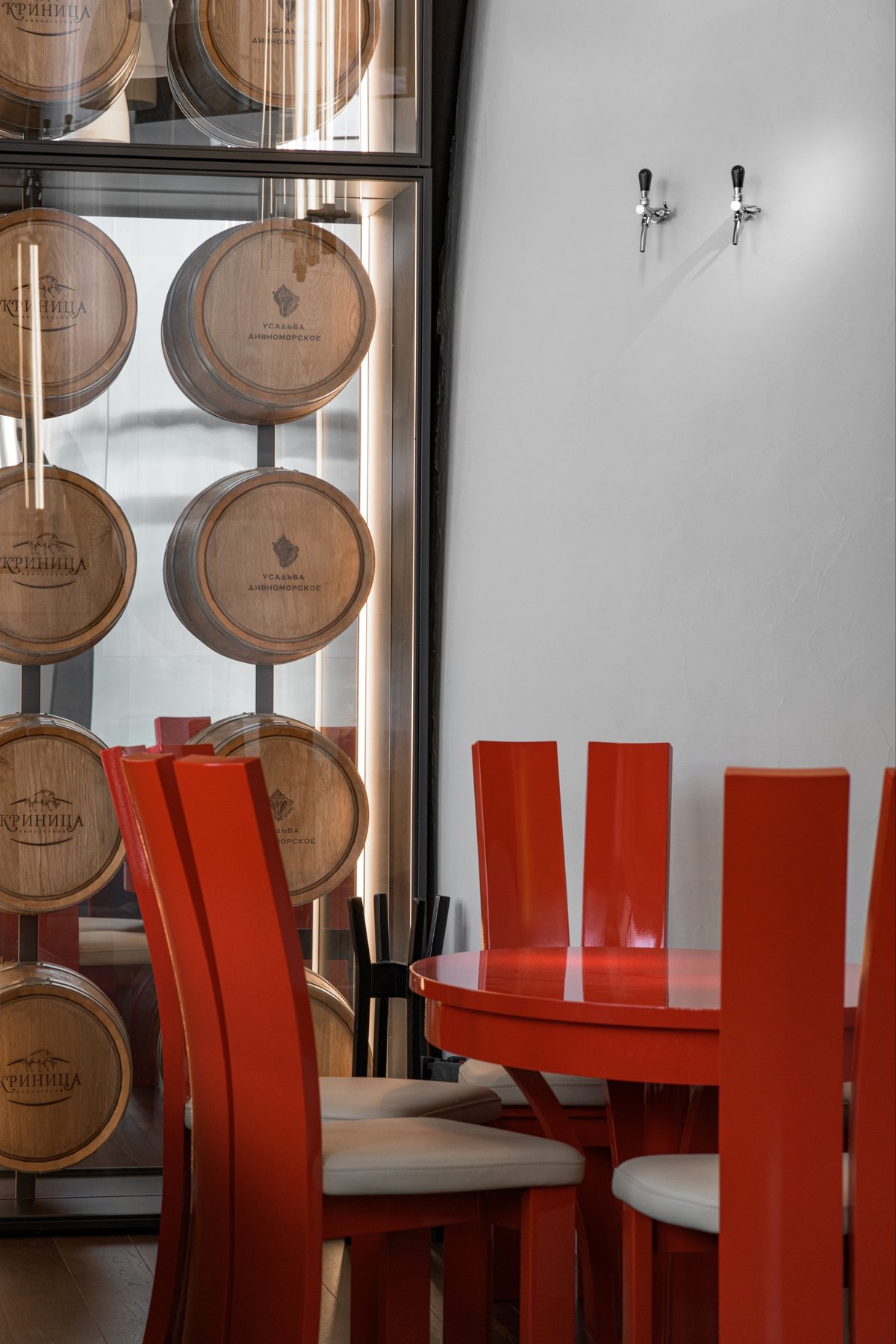
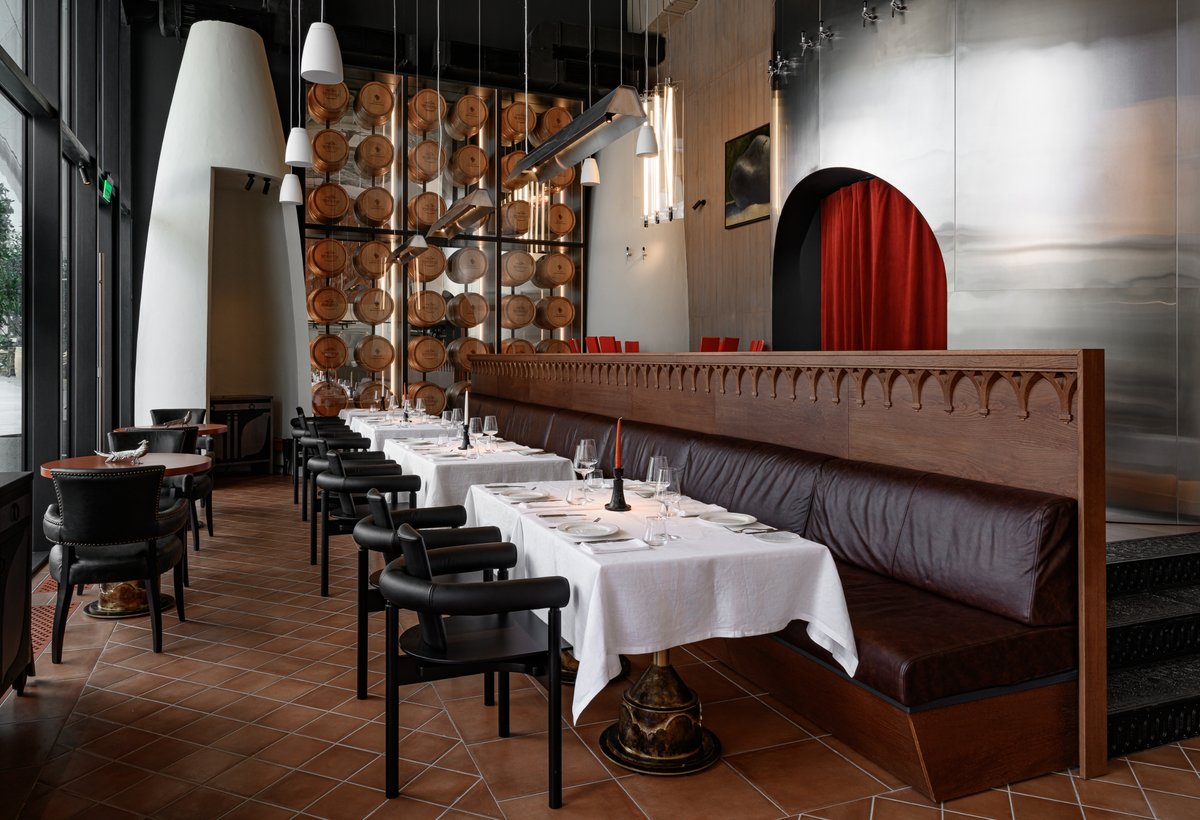
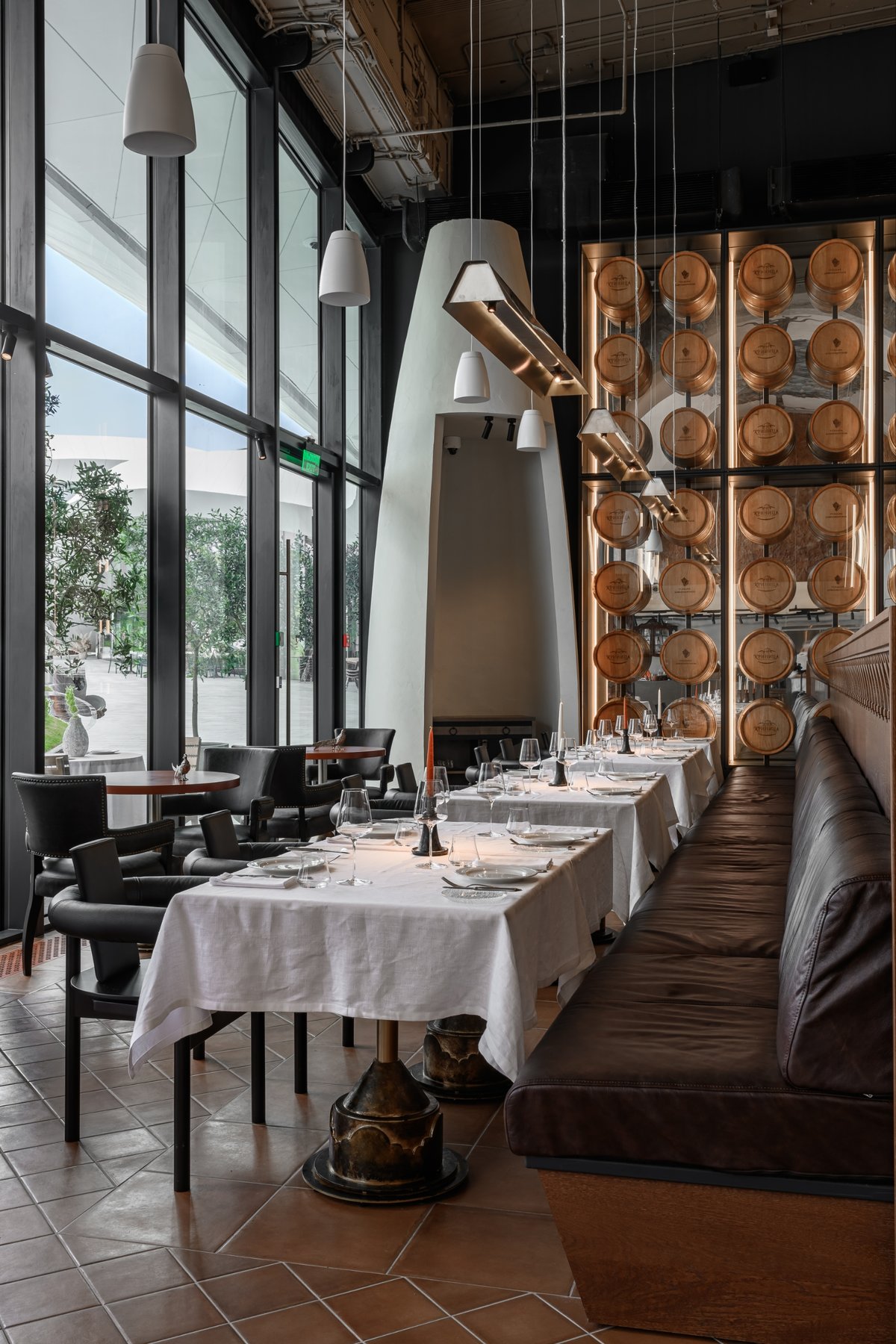
Installations composed of seemingly endless rows of wine barrels play another important role. They become symbols of generosity and hospitality, qualities inseparable from both the ritual of gathering around a table and the culture of winemaking. Repeated almost to the point of illusion, the barrels create an impression of inexhaustible abundance.
Among the project’s more poetic elements is the Divny Forest. More than a decorative motif, it evokes the ancient forest as a place of power, mystery, and spirits. The graphics draw inspiration from illustrations found in old Russian fairy tales, introducing a subtle layer of folkloric mysticism into the interior.
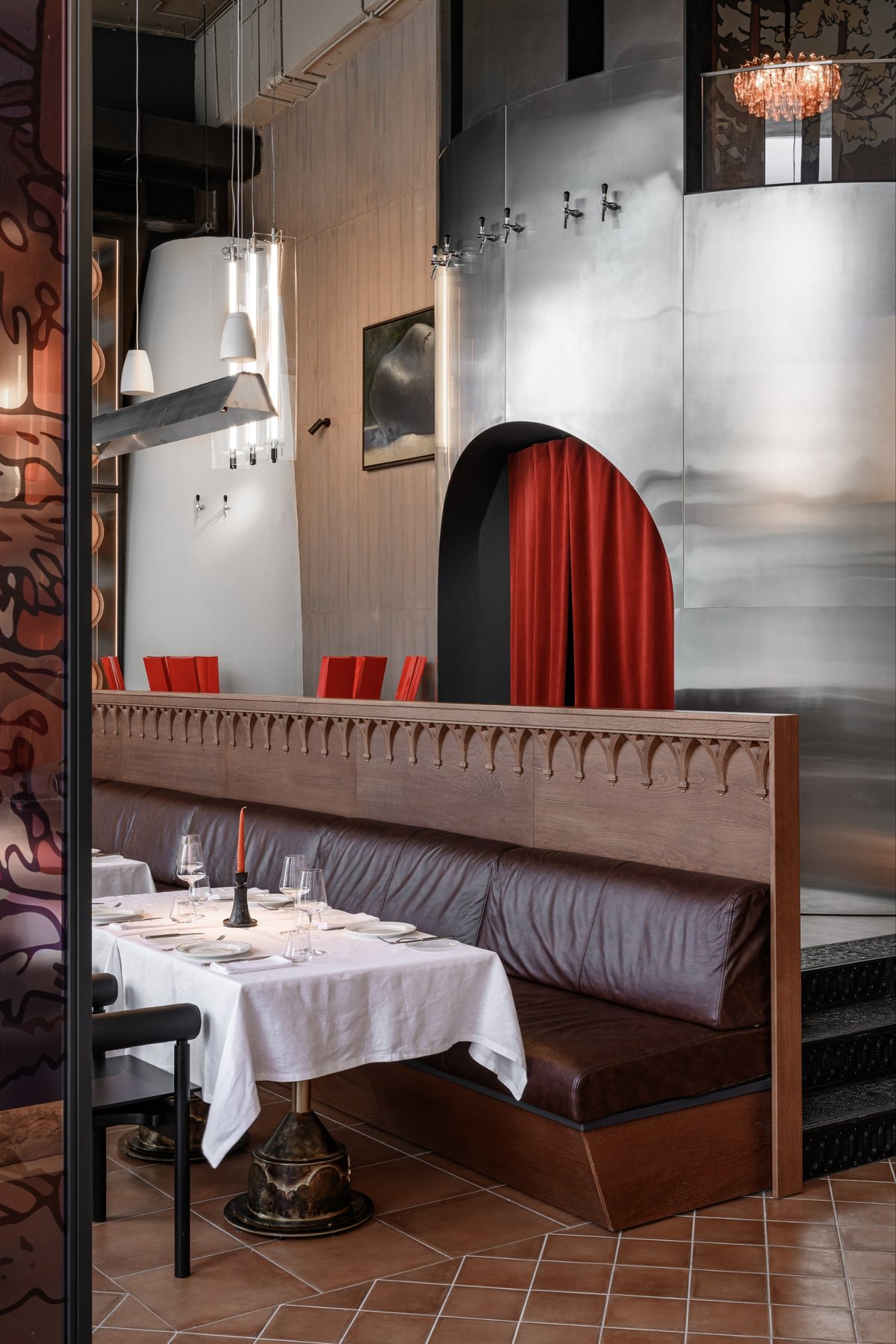
At the center of the composition stands an enigmatic stainless-steel Beast. The sculptural object is part oven, part mythological creature. A face seems to emerge from its form, suggesting a spirit of the place quietly inhabiting the restaurant and gathering guests around it. It becomes Mia’s emotional center – its guardian and central character.
The sense of fantasy continues through the table settings and decorative details. Generous arrangements of grapes and fruit recall the still lifes of the Old Masters, while carrot-shaped candles introduce an element of play and irony. Everyday objects take on a slightly fantastical quality, turning the meal itself into a kind of theatrical performance.
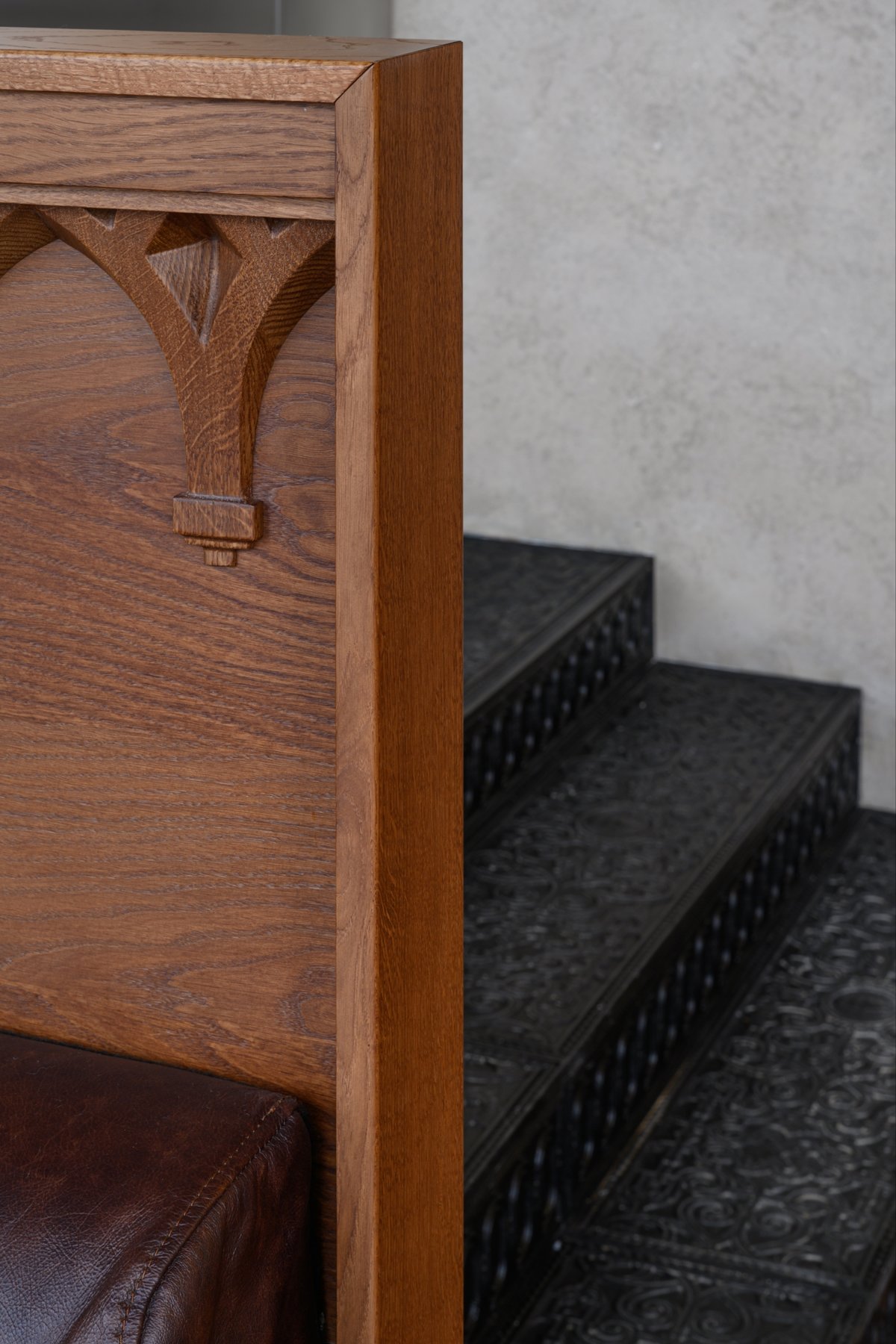
The furniture contributes to this sense of timelessness. Sofas with carved wooden details and substantial chairs reminiscent of castle furniture suggest an interior that might have existed for centuries.
An image of a tree painted across the vaults carries particular significance. Borrowed from medieval imagery, it represents an allegorical Tree of Grace: Gratia – grace , Arbor – tree, Fructus – fruit, Dulcedo – sweetness, Sapientia – wisdom. It can also be read as a metaphor for winemaking itself: an art born at the intersection of nature, time, knowledge, and human labor.
Mia ultimately exists somewhere between a castle and a wine cellar, fairy tale and reality, ancient forest and contemporary winery.
The philosophies of Usadba Divnomorskoe and Krinitsa are expressed not through literal references, but through atmosphere and emotion, creating a space where wine culture, architecture, and mythology become inseparable.